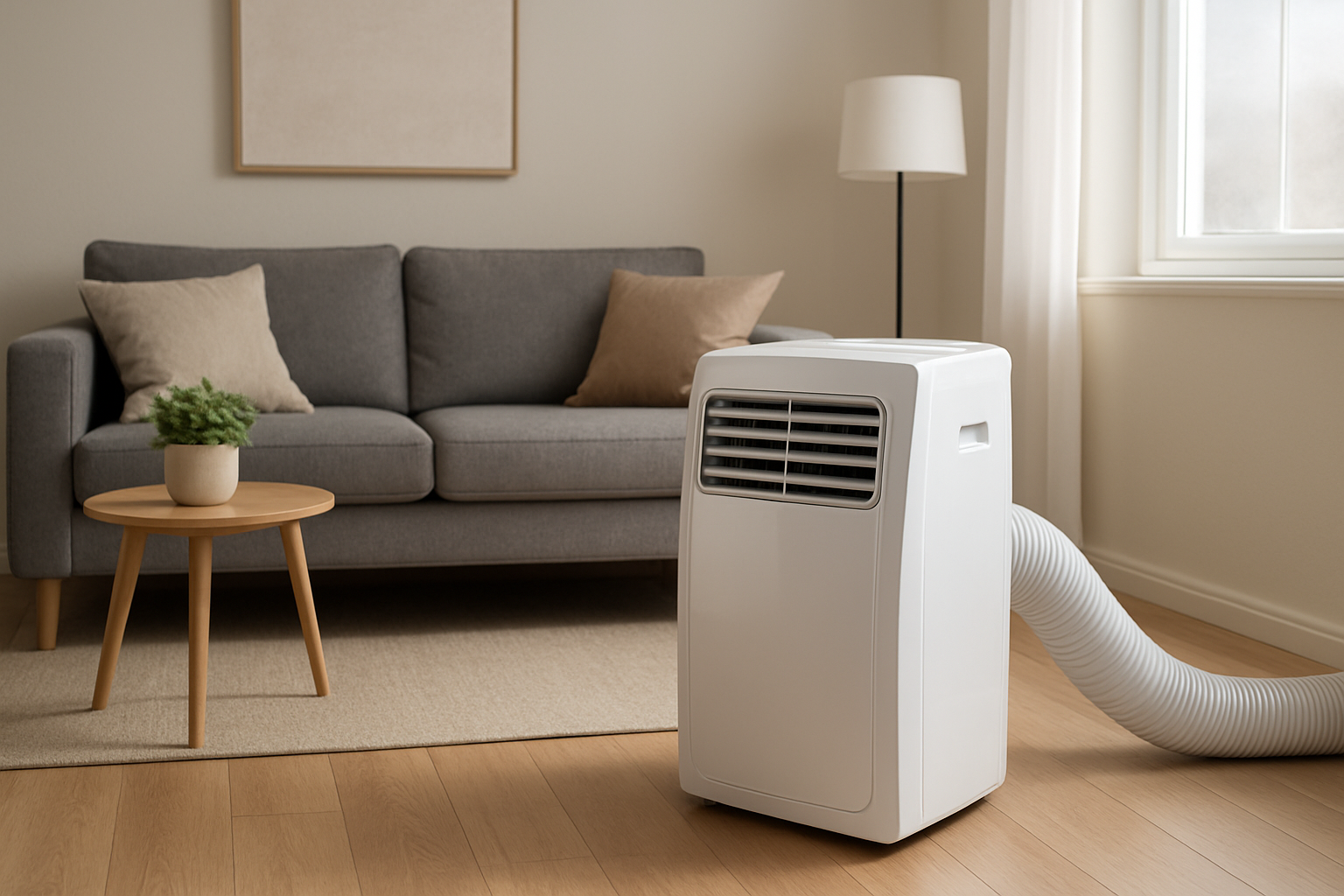
Portable AC Cools Briefly Then Stops? Protection Triggered
Quick Answer
If your portable AC blows cold for a short time, then the compressor stops and the unit seems to “give up,” the most likely cause is a thermal protection trigger from overheating due to restricted airflow or poor heat exhaust. First check: verify the hot exhaust hose is short, straight, tightly connected, and the window kit is sealed with no hot air leaking back into the room.
Identify the Comfort Pattern First
Before changing anything, sort your symptom into one of these patterns. The pattern tells you which protection is tripping and why.
- Happens on hot afternoons or in direct sun: points to condenser overheating and thermal overload from high room load or poor exhaust.
- Happens within 5–20 minutes of starting: typical of airflow restriction (dirty filter, blocked intake/exhaust) or exhaust recirculation.
- Happens after 30–90 minutes, then restarts later: consistent with internal thermal protector cycling as the unit heats up, cools down, then tries again.
- Unit stays on but air turns from cold to room temperature: often compressor off on protection while fan continues running.
- Airflow weak at the front grille or side intake: raises the odds of a restriction that causes coil temperature extremes and overheat.
- Cooling improves with the room door open: indicates the room load exceeds capacity or the unit is starved for return air, driving high operating temperature.
- Cooling gets worse with doors closed: suggests negative pressure and hot air infiltration, especially on single-hose models pulling makeup air from the home.
- Room feels clammy even when it cools briefly: hints the compressor is not running long enough to remove moisture because protection is interrupting run time.
- Big floor-to-ceiling temperature difference: indicates poor mixing; the unit satisfies a sensor quickly or cycles due to localized cold air near the sensor while the room stays warm.
What This Usually Means Physically
A portable AC must move heat from the indoor air to its condenser and then push that heat out through the exhaust hose. If the unit cannot reject heat fast enough, internal temperatures rise. To prevent compressor damage, a thermal protector opens and stops the compressor. The fan may continue, but without the compressor you lose real cooling.
The most common physical chain looks like this:
- Restricted airflow or recirculated exhaust raises condenser temperature.
- Higher condenser temperature forces the compressor to work harder and run hotter.
- Compressor and control compartment temperature rises until the thermal protector trips.
- Compressor stops for a cool-down period; indoor temperature and humidity rebound.
This is not a thermostat issue first. It is usually a heat rejection problem: the unit is making heat and cannot get rid of it fast enough. In real homes, this is heavily influenced by room heat load, solar gain, how well the window kit is sealed, hose length/routing, and how clean the airflow path is.
Most Probable Causes (Ranked)
- Exhaust heat recirculating back into the room (window kit or hose leaks): cooling is strong at first, then rapidly fades; the area near the window feels unusually hot or you can feel hot air blowing back around the kit.
- Airflow restriction on intake or filter (lint, pet hair, blocked grille): unit sounds strained, airflow feels weak, and the stop event happens faster as the filter loads up.
- Exhaust hose too long, crushed, kinked, or routed upward with sag: the hose becomes very hot, the unit cycles off sooner, and performance improves temporarily if you straighten/shorten the hose.
- Room load exceeds portable capacity (solar gain, open plan, cooking, multiple occupants): the unit runs hard, the room never stabilizes, and shutdowns are mostly on peak heat hours.
- Dirty condenser coil or internal lint mat (common in homes with pets): outside surfaces look clean but the unit overheats; shutdown interval is consistent even with good hose setup.
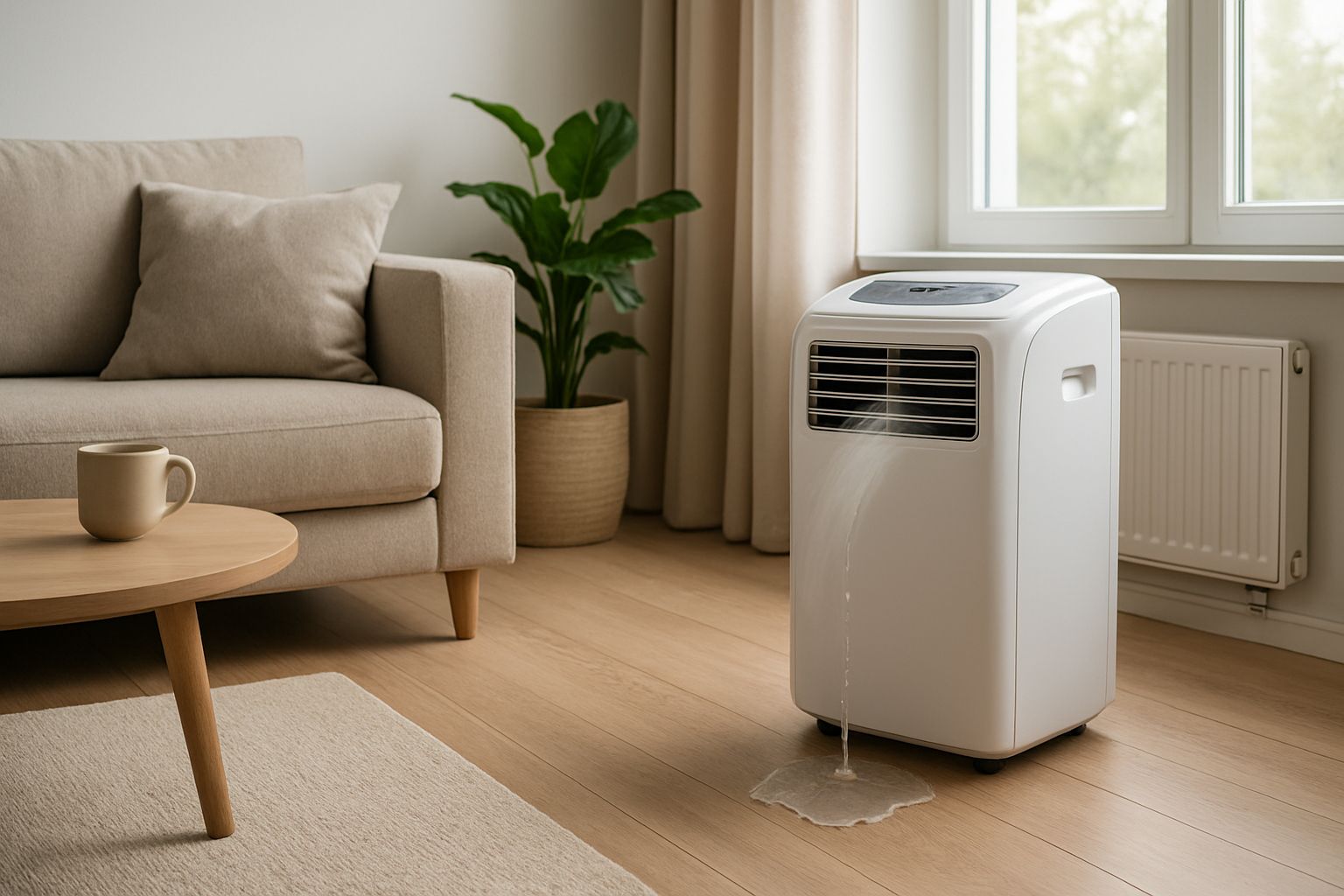
- Drain/water system issue causing abnormal operation (high humidity, full tank, pump/fault logic): compressor stops with a water light or the unit changes behavior after humid days.
- Electrical supply voltage drop or undersized extension cord: shutdowns occur when other loads kick on; cord or plug feels warm; unit may restart unpredictably.
- Sensor placement or control board error: less common; behavior does not correlate with hose setup, heat load, or airflow changes.
How to Confirm the Cause Yourself
These checks are observation-based and do not require tools or opening the unit.
- Watch the sequence: When cooling stops, does the fan keep running? If yes, you are likely seeing compressor shutdown on thermal protection rather than total power loss.
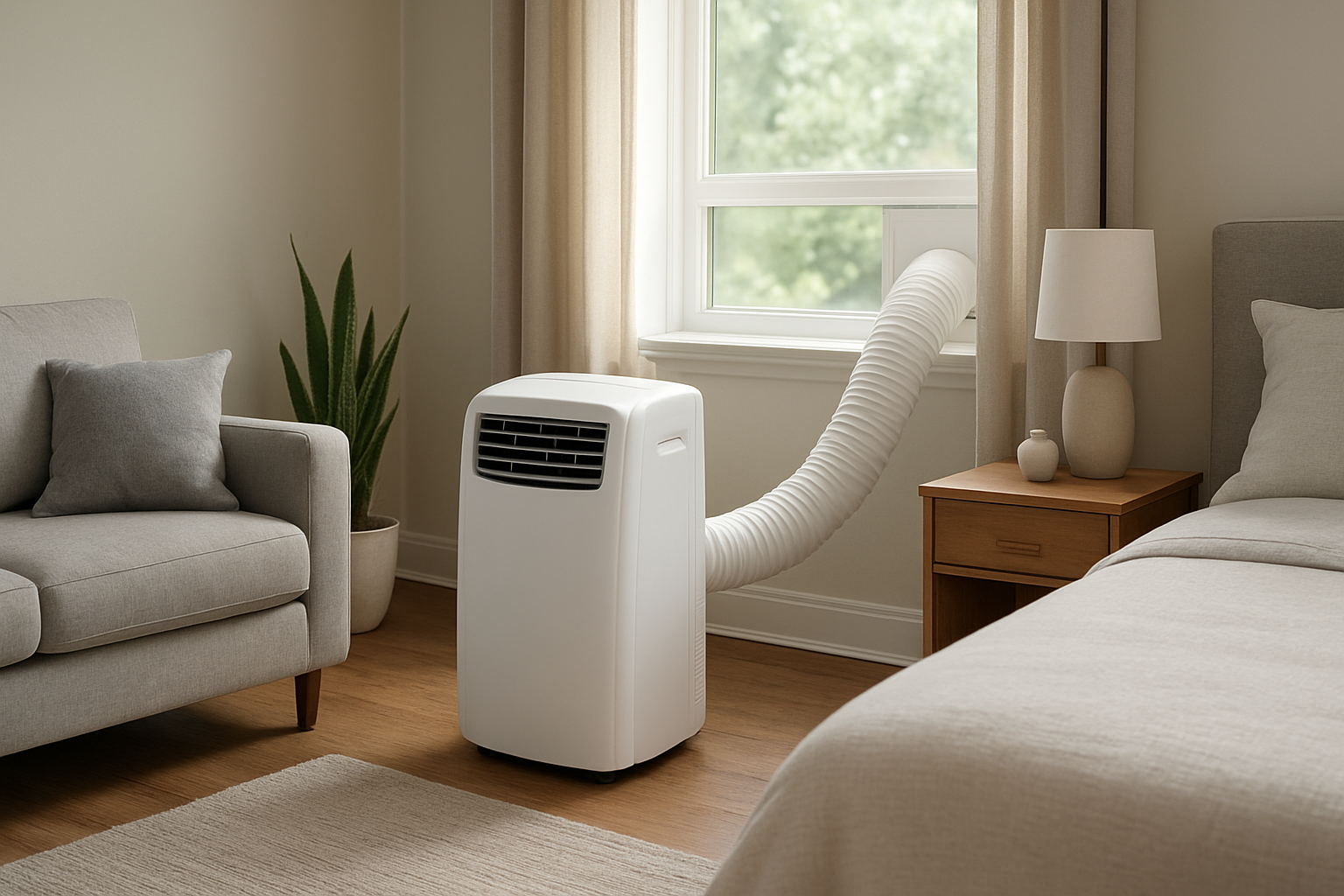
- Do the exhaust seal test: With the unit running, place your hand around the window kit edges and hose connections. Any noticeable hot air leaking into the room is a prime suspect. If you feel hot air returning indoors, the portable is reheating the same air it is trying to cool.
- Do the hose routing test: Temporarily shorten the hose to the minimum length, remove sag, and eliminate kinks. Keep it as straight and level as possible. If runtime before shutdown noticeably increases, overheating from poor heat rejection was the trigger.
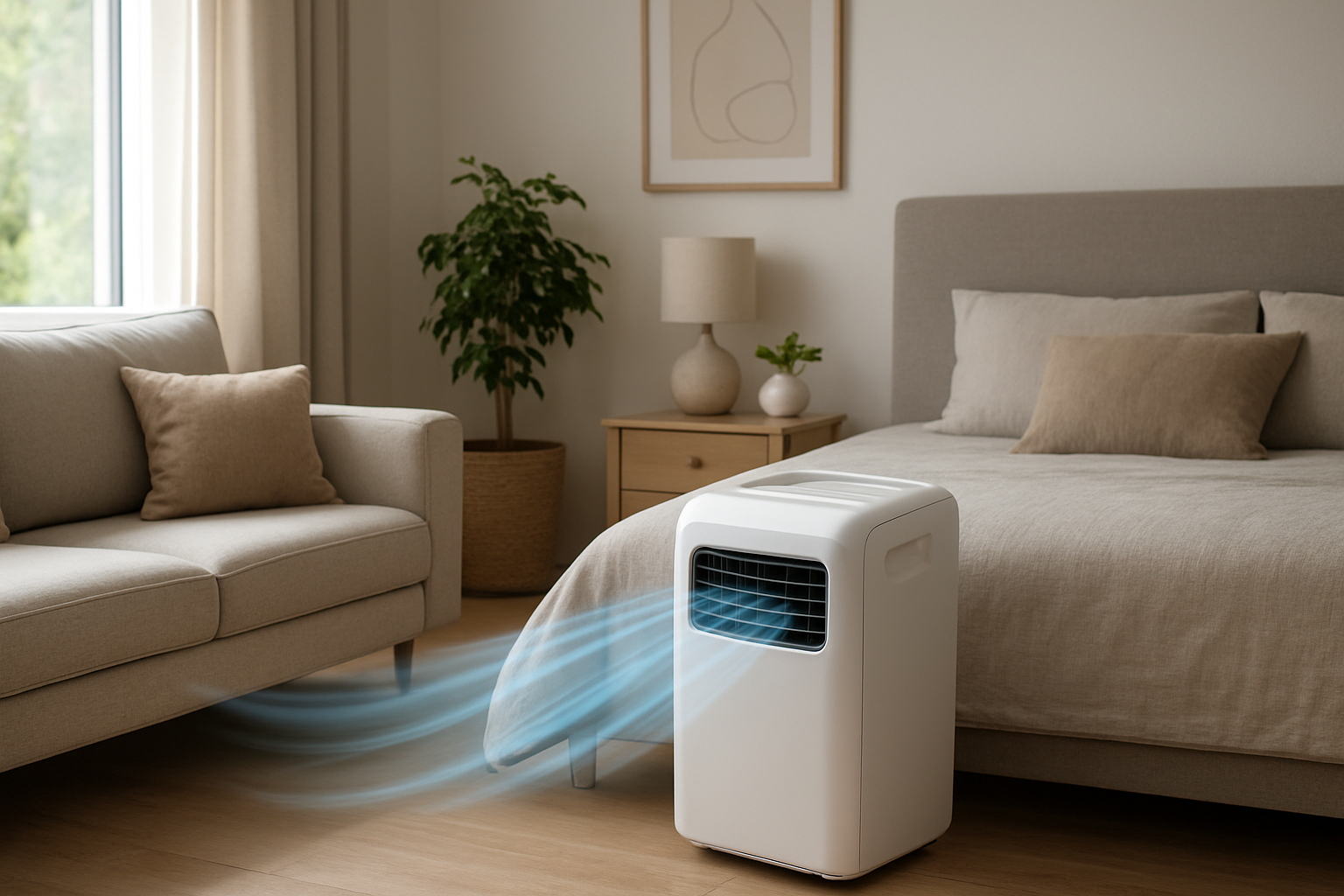
- Check intake airflow strength: Compare airflow at the intake grille now versus right after you cleaned the filter last time. If it feels weaker, clean the filter and ensure the grille has at least 12–24 inches of clearance from furniture, curtains, or bedding.
- Time-of-day correlation: If it only happens in late afternoon or when sun hits that wall/window, suspect solar gain and condenser overheating. Close blinds, add a shade, and retest. A longer stable runtime points to load and heat rejection limits, not a random defect.
- Door position test: Run it 20–30 minutes with the door closed, then repeat with the door open to a larger adjacent area. If the unit stops much sooner with the door closed, the small room is accumulating heat or the unit is starving for airflow/makeup air and overheating.
- Humidity cue: If the room feels sticky when the compressor stops, and comfort improves only during the brief cold period, the unit is short-cycling from protection and cannot run long enough to pull moisture out.
- Power delivery check (no instruments): Plug directly into a wall outlet. Do not use an extension cord or power strip. If the problem improves, you were likely seeing voltage drop or heat buildup at connections causing protective behavior.
Normal Behavior vs Real Problem
Normal: The compressor cycles off after the room temperature approaches the setpoint, then cycles back on as the room warms. The exhaust stays consistently hot while cooling, the unit does not require long cool-down pauses, and comfort remains stable without big humidity swings.
Likely problem (thermal protection cycling): Cold air output is strong initially, then the compressor drops out even though the room is still warm. The unit needs a noticeable cool-down period before it can cool again. The exhaust area gets excessively hot, and performance depends heavily on hose routing, window sealing, and airflow clearance.
When Professional Service Is Needed
- Shutdown persists after you confirm a tight window seal, short/straight hose, and clean filter: points to internal coil fouling, fan performance issues, or component overheating that needs disassembly to verify.
- Runtime before shutdown keeps getting shorter over days or weeks: indicates a progressing airflow or heat rejection problem internally.
- Burning smell, repeated tripped breaker, hot plug, or buzzing with compressor attempts: stop using the unit and schedule service; these are electrical or motor stress indicators.
- Unit displays error codes related to high temp, condenser, or compressor protection: an experienced technician can confirm fan operation, coil condition, and sensor accuracy.
- Water-related faults that recur despite correct draining setup: internal pump/float issues can interrupt compressor operation and mimic protection cycling.
How to Prevent This in the Future
- Keep the exhaust path efficient: shortest hose length, no kinks, minimal upward loops, and a sealed window kit with no gaps that leak hot air back into the room.
- Maintain airflow clearance: keep intake and discharge grilles clear of curtains, furniture, and bedding; blocked intake is a fast way to trigger thermal protection.
- Clean on a schedule tied to your home: homes with pets or heavy dust need filter cleaning far more often; reduced airflow is the most common trigger.
- Reduce peak load: close blinds on sun-facing windows, limit heat sources during peak hours, and avoid running the unit in a tiny enclosed room without adequate air exchange.
- Use proper power: direct wall outlet, correct circuit capacity, no extension cords; poor power delivery increases heat and nuisance shutdowns.
Related Home Comfort Symptoms
- Portable AC runs but does not cool the room: often the same exhaust recirculation or load mismatch, without obvious shutdown.
- Portable AC blows cold then turns warm repeatedly: compressor protection cycling or control logic reacting to overheating.
- Room feels humid even with AC on: short run times from protection prevent moisture removal.
- Portable AC trips breaker after running a while: overheating and electrical draw increase together; can be linked to restricted airflow.
- Hot spot around the window kit or hose connection: direct evidence of rejected heat leaking back indoors.
Conclusion
A portable AC that cools briefly then stops is most often shutting the compressor down on thermal protection because it cannot reject heat fast enough. Start by correcting the exhaust setup and sealing, then verify strong intake airflow with a clean filter and clear grilles. If the unit still short-cycles on protection with a proper hose arrangement and clean airflow path, professional service is justified to check internal coil fouling, fan performance, and overheating components.
Frequently Asked Questions
Why does my portable AC cool for 10 minutes then only the fan runs?
That pattern matches a compressor thermal protector opening. The fan can keep running while the compressor is forced off to cool down. The most common reasons are restricted airflow through the unit or hot exhaust air leaking back into the room, causing internal temperatures to rise quickly.
Can a kinked exhaust hose really make it shut off?
Yes. A kink increases backpressure and reduces heat removal at the condenser. The unit then runs hotter and trips protection sooner. Straightening and shortening the hose is one of the fastest ways to confirm heat rejection as the root cause.
My unit stops mostly in the afternoon. Is that normal?
It is common for marginal setups to fail during peak heat. Afternoon solar gain and higher outdoor temperatures reduce how easily the portable can dump heat through the hose. If the unit only stops during peak hours, focus on window sealing, shading the room, and maximizing hose efficiency.
Should I drain water if it keeps shutting off?
If the unit has a full-tank indicator, drainage is mandatory because some models stop the compressor to prevent overflow. If there is no water light and the stop happens like a heat-related cycle, draining may not change it, but high humidity can still increase load and shorten stable run time.
Is it safe to use an extension cord with a portable AC?
It is a common cause of nuisance shutdowns and overheating at the plug due to voltage drop and connection heat. For diagnostic accuracy and safety, plug the unit directly into a wall outlet. If performance improves, the power delivery was part of the problem.
Need a complete overview? Visit the full troubleshooting guide here: Read the full guide for more causes and fixes.
It’s easy to feel personally betrayed by a unit that turns on with confidence and then quits like it’s clocking out early. But that brief cool-down isn’t the end of the story—it’s more like a pause button, followed by things settling into place.
When it all stops behaving, the room suddenly feels a little more like summer homework. Still, there’s a certain relief in seeing the pattern, even if it’s not glamorous, and moving on with your day like the AC is finally on the same schedule as you.