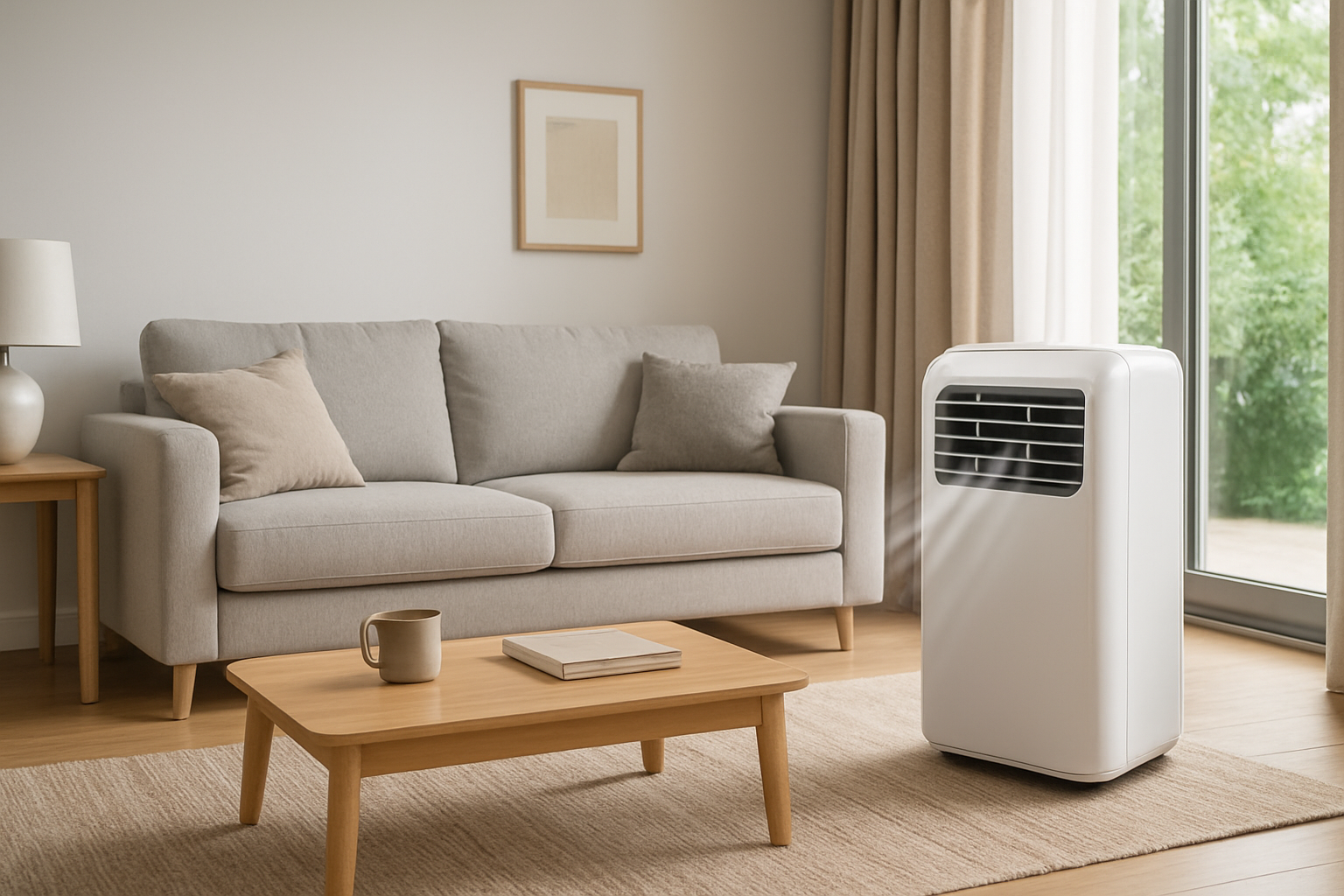
Diagnose why your portable air conditioner cools but fails to remove humidity, causing the room to feel muggy, and learn solutions for effective dehumidification.
Portable AC Cools Air But Room Still Feels Muggy? Humidity Not Removed
Quick Answer
If a portable AC blows cold air but the room still feels muggy, the most likely issue is low effective dehumidification from poor air sealing, wrong operating mode, or short cycling that never lets the coil stay cold long enough to condense moisture. First check: confirm it is set to Cool (not Fan) and that the exhaust hose and window panel are tightly sealed with no hot air leaks.
Identify the Comfort Pattern First
Before blaming the unit, sort the symptom by pattern. This tells you whether the AC is failing to remove moisture or whether moisture is entering faster than it can remove it.
When it happens: Worse on rainy days, after showers/cooking, or evenings suggests high humidity load. Worse during peak afternoon sun can indicate the unit is spending capacity on heat, leaving less for moisture removal.
Where it happens: Muggy in the same room as the portable AC usually points to infiltration or exhaust setup problems. Muggy in adjacent rooms points to open-door moisture migration or the unit only treating a small zone.
System running vs off: If it feels muggiest while the AC is running, suspect negative pressure drawing humid outdoor air in. If it feels muggy mostly after the unit cycles off, suspect short cycles and humidity rebound.
Constant vs intermittent: Constant muggy feel often means a continuous moisture source or continuous infiltration. Intermittent muggy periods often track showering, cooking, laundry, or outdoor humidity spikes.
Doors open vs closed: If closing the door makes the room feel more humid, the unit may be depressurizing the room and pulling wet air in through cracks. If opening the door makes it worse, you may be importing humidity from the rest of the home.
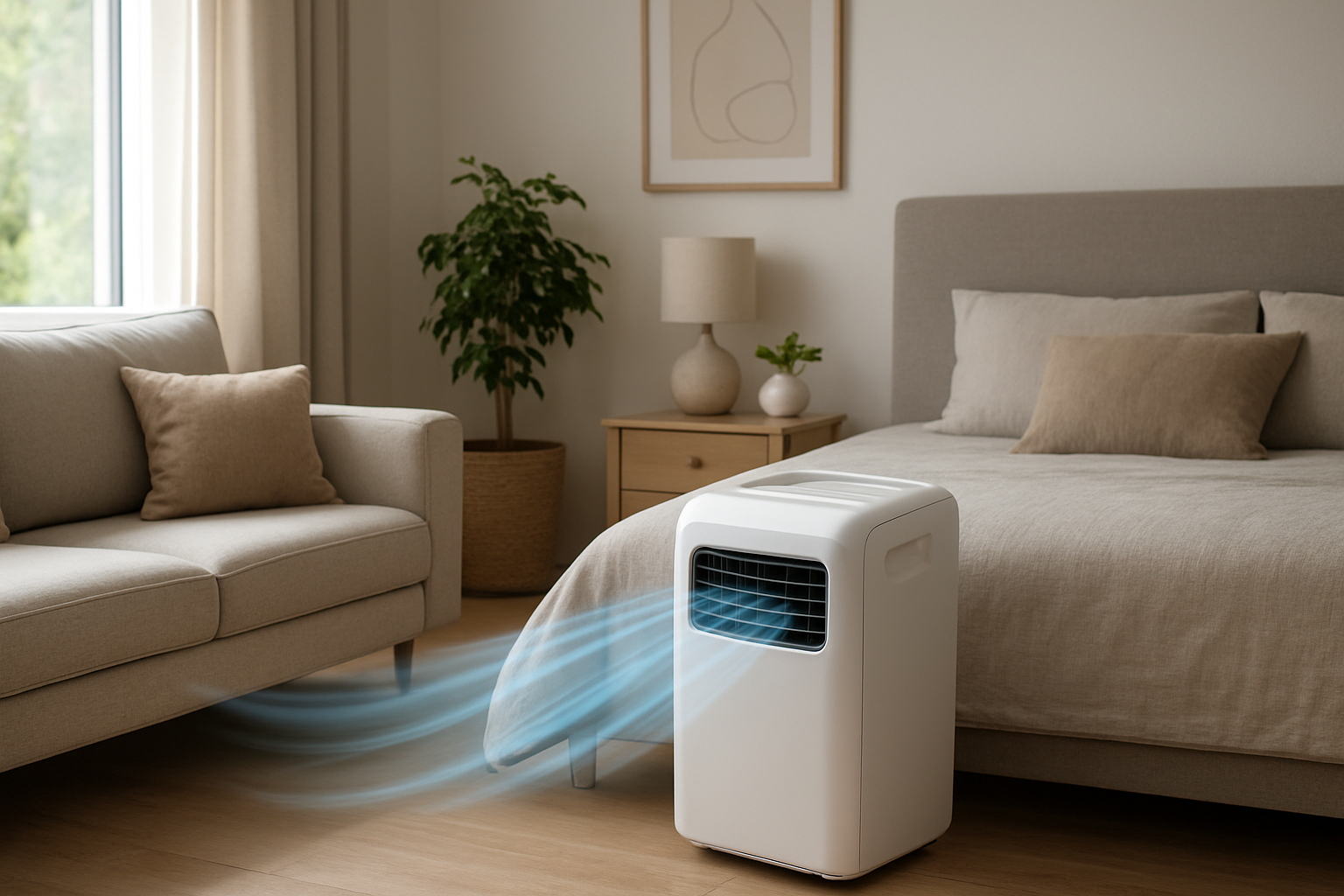
Vertical differences: Cooler air at floor level but muggy/warm at head height points to stratification from weak mixing or low airflow, not necessarily poor cooling.
Humidity perception: Sticky skin, slow sweat evaporation, and clammy feeling even at 72–76°F indicates high relative humidity, typically above about 55–60% in most homes.
Airflow strength: Strong cold airflow but persistent mugginess points to moisture not condensing (coil not cold enough long enough) or moisture being reintroduced (leaks, drain issues, improper mode).
What This Usually Means Physically
Dehumidification from an air conditioner is not automatic just because the air feels cold. Moisture removal happens only when humid room air contacts an evaporator coil that is below the air’s dew point long enough for water to condense and then be carried away as liquid water.
Cooling without drying: If the unit cools the air quickly and then shuts off, the coil warms up, condensation stops, and the room humidity can stay high. Sensible cooling happens faster than latent (moisture) removal.
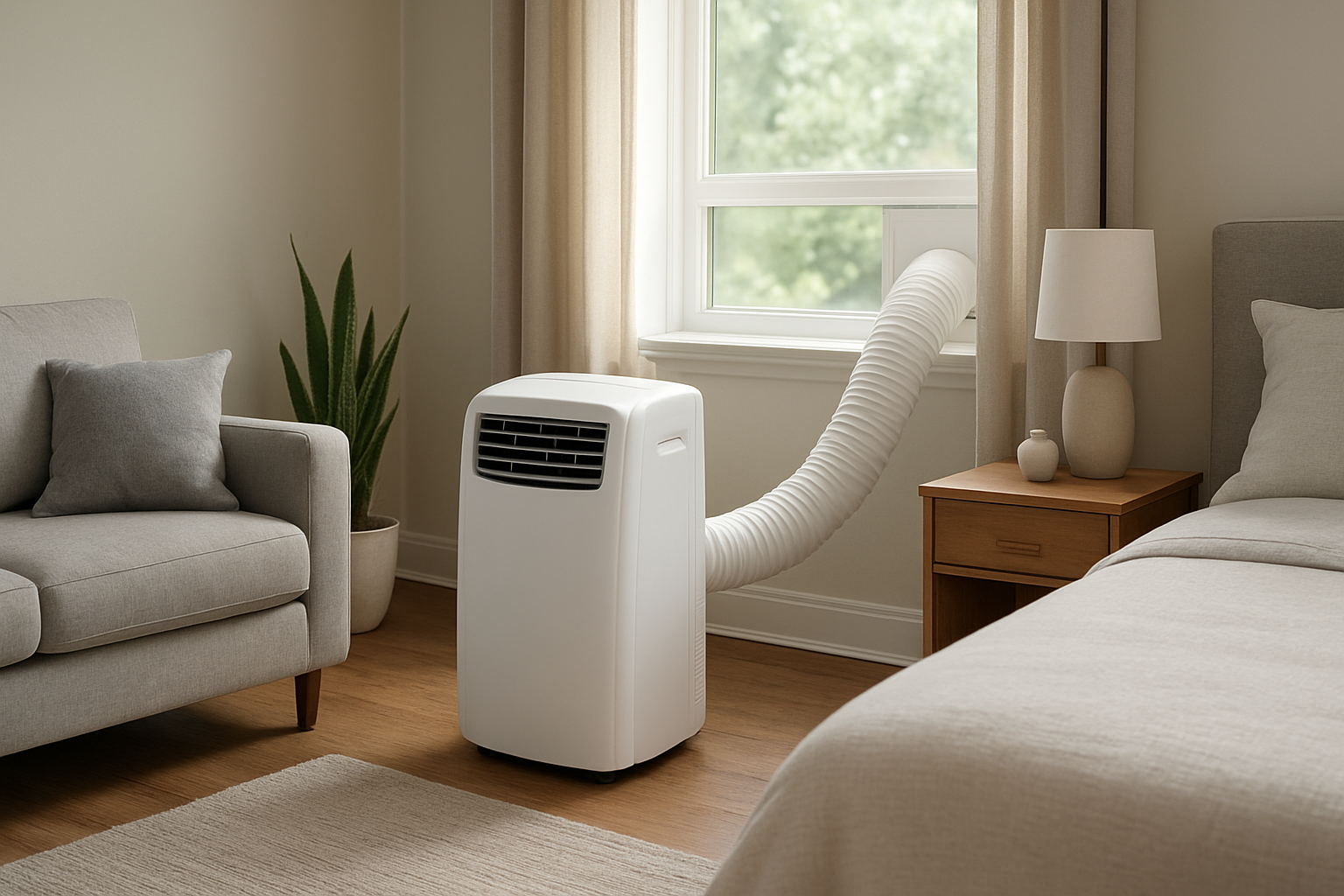
Negative pressure and infiltration: Single-hose portable ACs exhaust indoor air outside. That air must be replaced, so the room pulls in makeup air through gaps around windows, doors, baseboards, attic hatches, and wall penetrations. In humid weather, that makeup air can have more moisture than the AC can remove, so the room stays muggy even while temperature drops.
Heat and moisture load mismatch: If outdoor dew point is high, the moisture load entering through leakage or open doors can exceed the unit’s latent capacity. The room may reach the thermostat setpoint while humidity stays elevated.
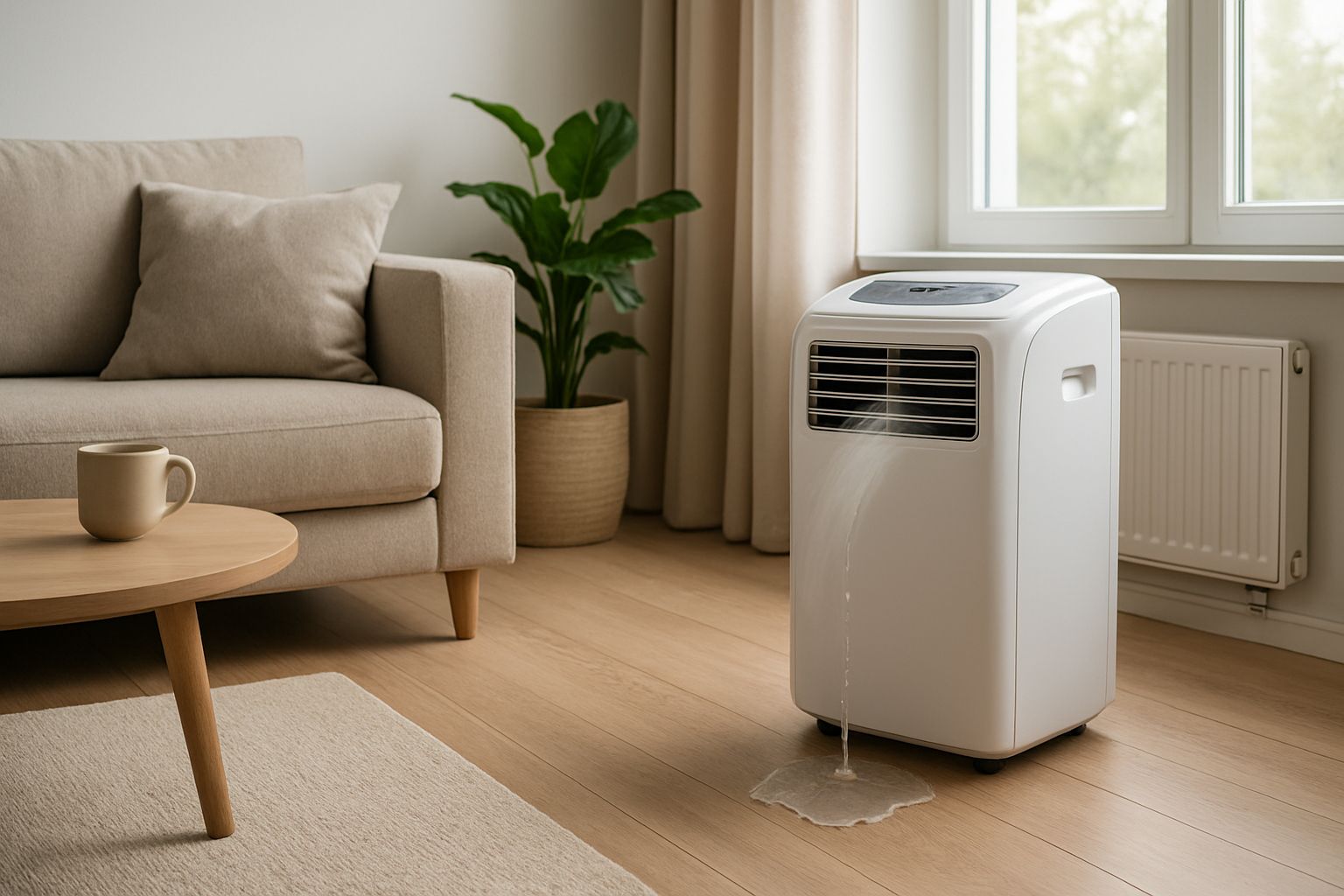
Re-evaporation: If condensate does not drain properly, water can sit in the pan and be re-evaporated into the air stream, reducing net dehumidification.
Airflow and coil temperature: Too much airflow across the coil can keep it warmer, favoring cooling over moisture removal. Too little airflow can cause icing which also reduces dehumidification and airflow.
Most Probable Causes (Ranked)
1) Single-hose portable AC causing negative pressure and pulling in humid outdoor air
Clue: The room feels muggy while the unit is running, especially on humid days; you can feel air movement at door gaps or around windows; odors from outside/garage/basement appear.
2) Leaky exhaust setup or poorly sealed window panel
Clue: Hot, humid air can be felt around the window kit or hose connection; the hose feels extremely hot; performance is worse near the window side of the room.
3) Wrong mode or fan setting preventing sustained cold coil
Clue: Unit is in Fan or a high continuous fan setting; coil cycles warm; room temperature drops but humidity barely changes.
4) Short cycling due to oversizing or thermostat/sensor placement
Clue: Unit shuts off after only a few minutes; humidity rebounds quickly; best comfort occurs only during longer continuous runs.
Clue: Little to no water collected during humid weather; musty smell near the unit; sloshing water sounds; room humidity not improving even with long runtime.
6) High internal moisture sources exceeding the unit’s latent capacity
Clue: Mugginess spikes after showers, cooking, running a dryer, or many occupants; bathroom/kitchen exhaust usage changes the outcome.
7) Frosting/icing or restricted airflow reducing effective coil area
Clue: Airflow weakens over time; unit seems cold at first then degrades; visible frost or the unit stops cooling until it rests.
How to Confirm the Cause Yourself
These checks use observation and simple comparisons. Do them on a humid day for the clearest results.
Check mode and fan behavior: Confirm the unit is in Cool mode. If there is an Eco setting, use it. Avoid Fan-only. If there is a fan speed choice, try a lower fan speed for 30–60 minutes and note whether the air starts to feel less clammy.
Run-time test: Time how long it runs before shutting off. If it cycles off in under 10 minutes repeatedly while the room still feels muggy, short cycling is likely.
Window kit leak test by hand: With the unit running, slowly move your hand around the window panel edges, hose connections, and sash. Any cool draft inward or warm draft outward indicates leakage. The most common is warm humid air being pulled in around the panel due to negative pressure.
Door position test: With the unit running, run it 20 minutes with the door closed, then 20 minutes with the door cracked 1–2 inches to a conditioned hallway. If cracking the door reduces the muggy feel, the room was likely being depressurized and pulling humid outdoor air through leaks.
Condensate expectation check: In humid conditions, you should typically see evidence of water management: either water in an internal tank requiring emptying, water at a drain hose, or periodic evaporation if designed that way. If the room is muggy and you never see any condensate behavior, suspect drainage/re-evaporation problems or that the coil is not staying below dew point.
Stratification check: Stand and then sit. If it feels comfortable near the floor but sticky at head height, aim the discharge to mix air across the room and ceiling, not directly at your body. If mixing improves comfort without changing temperature, the issue is likely poor air distribution rather than lack of cooling.
Odor and infiltration clues: If outdoor smells (fresh cut grass, car exhaust, damp soil) appear stronger when the portable AC runs, it is likely pulling outside air in.
Normal Behavior vs Real Problem
Normal: A portable AC may cool the room faster than it dries it. On very humid days, it can take 1–3 hours of steady runtime for the muggy feel to noticeably improve, especially if doors are opened frequently.
Normal: Some units intentionally re-evaporate part of the condensate to improve efficiency. That can reduce how much water you see collected, even while it is still dehumidifying.
Problem: Room remains clammy after several hours of operation with the door closed and the unit maintaining temperature.
Problem: Muggy feeling gets worse while the unit runs, especially if you detect drafts around the room envelope or window kit.
Problem: Repeated short cycling (often under 10 minutes) with minimal improvement in humidity comfort.
Problem: Airflow degrades over time, or the unit needs frequent rest periods to cool again (possible icing or restriction).
When Professional Service Is Needed
Persistent comfort failure: After sealing the window kit well and running in Cool mode for 2–4 hours with doors closed, the room still feels consistently clammy.
Performance decline: Cooling output or airflow has noticeably dropped compared to prior seasons, or the unit ices up, suggesting airflow restriction or refrigeration issues.
Drainage problems: Evidence of water staying in the unit, musty odor, or leaking that returns after cleaning and correct setup.
Building-related humidity: If multiple rooms are muggy and not just the portable AC zone, the home may have a whole-house humidity load problem (ventilation imbalance, crawlspace/basement moisture, or excessive infiltration) that requires diagnostic testing.
Safety indicators: Burning smells, tripped breakers, or water near electrical connections.
How to Prevent This in the Future
Seal the exhaust path like it matters: Tight window panel fit, foam around edges, and secure hose connections reduce recirculation and infiltration-driven humidity.
Prefer dual-hose units when humidity is the complaint: Dual-hose designs reduce negative pressure and typically improve dehumidification in humid climates because they do not use as much conditioned indoor air for exhaust.
Set for longer runs: Use a slightly lower setpoint or an Eco setting that promotes longer cycles, not rapid on/off behavior. Longer coil-on time generally improves net moisture removal.
Manage indoor moisture sources: Use bathroom and kitchen exhaust during and after moisture events. Avoid drying clothes indoors in the conditioned space.
Keep airflow paths open: Clean filters regularly and keep the discharge unobstructed so the coil stays at the right temperature and does not freeze.
Related Home Comfort Symptoms
Portable AC blows cold but room temperature barely drops
Room feels clammy only at night or when it rains
Musty odor increases when the AC runs
Condensate tank never fills even in humid weather
AC makes room feel stuffy or causes drafts at doors/windows
Conclusion
Cold air without drying usually means the portable AC is not achieving sustained condensation or the room is being loaded with humid makeup air faster than the unit can remove it. Start with the highest-payoff check: verify Cool mode and tightly seal the exhaust and window panel. If mugginess improves when the door is cracked to conditioned space, negative pressure infiltration is the core issue. If not, focus next on short cycling and condensate draining behavior.
Frequently Asked Questions
Why does the room feel more humid when the portable AC is running?
A common reason is negative pressure from a single-hose portable AC. It exhausts indoor air outside, and the replacement air is pulled in through leaks. If that makeup air is humid, the room can feel muggy even while the air temperature drops.
Should a portable AC always collect water when it is humid?
In humid conditions, you should usually see some sign of moisture removal, but not always as a filling bucket. Many units partially or fully evaporate condensate into the exhaust. If the room stays muggy and you never observe any condensate behavior, it suggests the coil is not staying below dew point long enough or water is being re-evaporated inside the unit.
Does higher fan speed remove more humidity?
Often the opposite. Higher fan speed can warm the evaporator coil and reduce condensation, improving temperature drop but reducing dehumidification. If humidity comfort is the priority, a lower fan speed and longer run cycles typically dry better.
How long should it take to feel less muggy?
If the room is sealed reasonably well and the unit is correctly set up, you should usually feel a humidity comfort improvement within 60–180 minutes of steady operation. If the temperature reaches setpoint quickly but the clammy feel persists for hours, the unit is likely not achieving net moisture removal or humid air is leaking in continuously.
Is this a sign the portable AC is low on refrigerant?
Low refrigerant is possible but less common than setup and infiltration issues. Clues that point more toward a unit problem include declining cooling over time, icing, weak airflow from internal restriction, or performance that used to be better with the same installation. Setup and sealing checks should be done first.
Need a complete overview? Visit the full troubleshooting guide here: Read the full guide for more causes and fixes.
Even when the temperature seems under control, that damp, sticky feeling can linger like a bad houseguest. The air may be getting colder, but the comfort piece keeps getting left on the table.
It’s the kind of small daily annoyance that makes you double-check the obvious. But once you notice the mismatch, the muggy moments feel less random—and a lot more explainable.