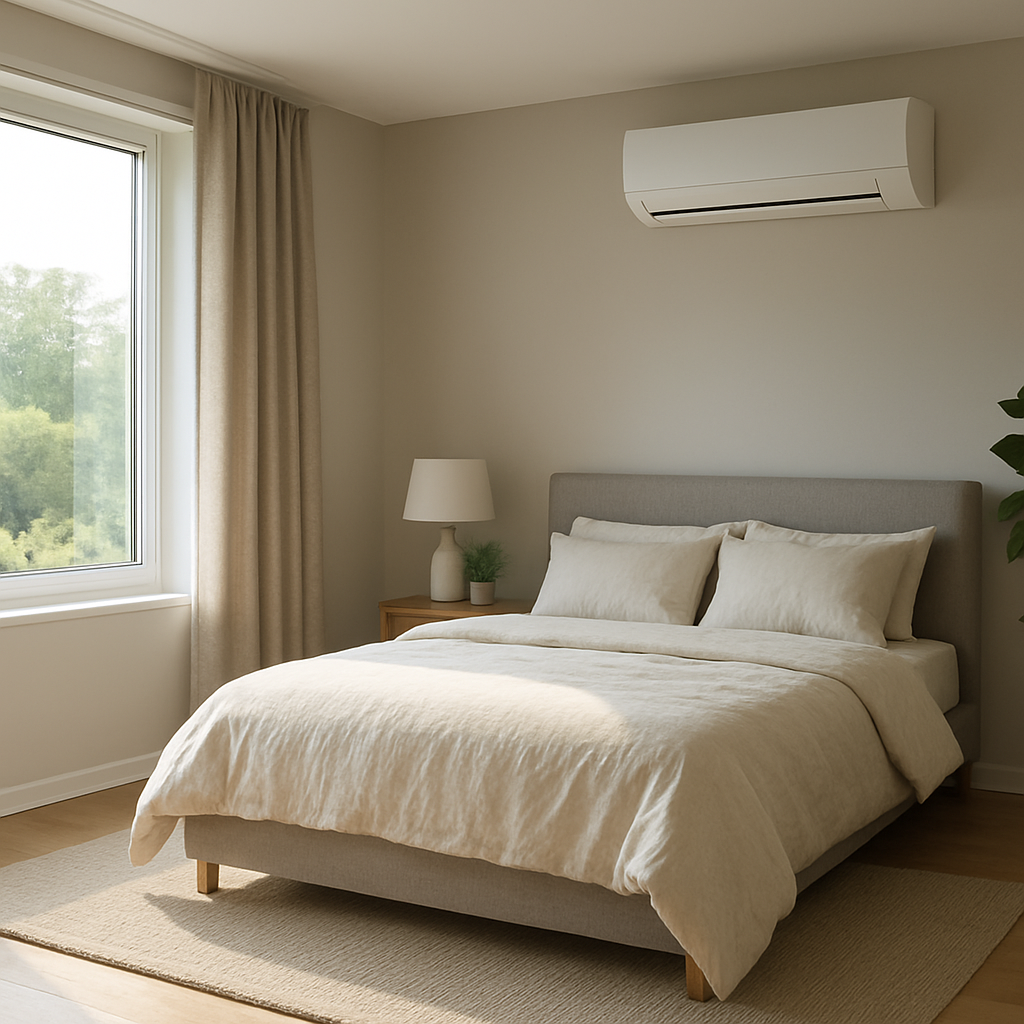
Diagnose why bedroom air remains stale even with open windows, focusing on causes of poor air exchange and solutions to improve indoor air freshness.
Bedroom Air Feels Stale Even With Windows Open? Poor Air Exchange
Quick Answer
If your bedroom still feels stale with windows open, the most likely issue is insufficient air exchange due to weak cross-breeze and pressure dynamics that prevent outdoor air from actually flushing the room. First check: open the bedroom door and a second window elsewhere in the home, then note whether the stale feeling improves within 10–20 minutes.
Identify the Comfort Pattern First
Stale air complaints are only useful diagnostically when the pattern is specific. Use these observations to narrow it down before changing anything.
Time of day and weather: Worse on still, humid, or very hot days usually points to weak natural air exchange. Worse at night can indicate reduced wind and stronger stack effect trapping air.
Where it happens: If only the bedroom feels stale while the rest of the house feels normal, the bedroom likely lacks a flow path and becomes a dead-end zone.
Windows open but feels unchanged: If you do not feel a consistent, directional breeze at the window (not just cooler air near the opening), the room is not exchanging air, it is only mixing near the window.
Door open vs closed: If opening the bedroom door quickly improves the feel, the problem is restricted return or no pressure relief path, not the window itself.
HVAC running vs off: If it feels worse when the HVAC is running, the bedroom may be under positive/negative pressure that limits outdoor air entry or pulls air from undesirable locations. If it feels worse when the HVAC is off, you likely have too little induced mixing and exchange.
Constant vs intermittent: Intermittent staleness typically tracks wind direction, exhaust fan use, and door position. Constant staleness suggests a consistently weak flow path in or out.
Vertical differences: Stale and warmer near the ceiling with little movement indicates stratification and low air change, especially in upstairs bedrooms.
Humidity perception: If the room feels clammy even with windows open, outdoor humidity plus low air movement is dominating comfort. If it feels stuffy without feeling humid, it is often low air change and odor/CO2 buildup.
Airflow strength at supply registers: Weak supply airflow in the bedroom compared to other rooms supports poor circulation and poor dilution of stale air, even if the window is open.
What This Usually Means Physically
Opening a window does not guarantee fresh air exchange. For outdoor air to replace indoor air, the room needs a pressure difference and a complete flow path: air must enter and air must leave.
In many bedrooms, the open window becomes a short-circuit mixing point instead of a ventilation path. Air moves a little at the opening, but the bulk air in the room stays stagnant because:
No cross-ventilation: With only one opening, pressure at that window can be neutral. Without a second opening (another window, a door undercut to a return, or an open door), there is little net flow.
Pressure zones block exchange: Wind creates positive pressure on one side of the house and negative on the other. If the bedroom window sits near a neutral pressure plane, air movement can be minimal even when other rooms get a breeze.
Stack effect and stratification: Warm air rises and can pool near the ceiling. Without enough mixing or an exit path high/low, the room can feel stale despite an open window.
Bedroom becomes a dead-end zone: Closed doors and tight construction reduce the return-air pathway. HVAC supply may pressurize the room, slowing outdoor air entry, or it may depressurize it and pull air from cavities rather than through the open window.
Humidity load overwhelms perceived freshness: Outdoor air can be humid. If it enters slowly and the room has low air movement, it feels heavy and stale, even though the air is technically being replaced.
The primary mechanism behind this symptom is insufficient net air change in the bedroom due to missing intake/exhaust balance and poor pressure relief, not simply a lack of an open window.
Most Probable Causes (Ranked)
Single-opening ventilation with no exit path (most common): Bedroom window is open, but the bedroom door is closed and there is no meaningful path for air to leave. Diagnostic clue: stale feel improves quickly when the door is opened.
Weak wind and neutral pressure at that window: Outdoor conditions do not create a pressure difference across the room. Diagnostic clue: other windows in the home show better air movement than the bedroom window at the same time.
Bedroom pressure imbalance from HVAC supply/return layout: Supply air enters but return path is restricted, or the return is too dominant. Diagnostic clue: the door is harder/easier to shut when the system runs, or airflow at the window changes when the blower turns on.
Return-air restriction when the door is closed: Undercut at the door is small, carpet blocks it, or there is no transfer grille/jump duct. Diagnostic clue: supply airflow noise changes when the door closes, and the room feels more stuffy with the door shut even with the window open.
Local odor/contaminant source in the room: Bedding, carpet, litter box, stored items, or damp materials create a persistent stale odor that ventilation cannot quickly dilute. Diagnostic clue: staleness is strongest near a specific closet, corner, or textile source.
High outdoor humidity combined with low airspeed: Fresh air is entering slowly but feels clammy and heavy. Diagnostic clue: staleness is worse on humid days and improves with a fan aimed to create steady airflow across the room.
How to Confirm the Cause Yourself
These checks rely on observation and simple comparisons. Make one change at a time and give it 10–20 minutes.
Door position test: With the bedroom window open, run the normal setup for 15 minutes with the door closed, then open the door fully. If the room quickly feels less stale or you feel a more consistent breeze, you had poor pressure relief and low exchange with the door closed.
Two-opening test: Open the bedroom window and open a second window on the opposite side of the home (or at least another room). Keep interior doors open. If the bedroom becomes noticeably fresher, your issue is lack of cross-ventilation, not the bedroom window.
HVAC influence test (system on vs off): With windows in the same position, compare how the air feels when the blower is running versus completely off. If it feels worse when running, suspect pressure imbalance or return restriction affecting the bedroom air path.
Tissue or lightweight paper at the door gap: With the HVAC running and the bedroom door nearly closed (leave a small gap), see if the paper consistently pulls in or pushes out. Strong, steady movement indicates a pressure difference that can disrupt natural ventilation and reduce effective exchange through the window.
Supply airflow comparison: Compare airflow at the bedroom supply register to a nearby room of similar size when the system is running. If the bedroom is clearly weaker, the room will mix and dilute poorly, making any ventilation effect less noticeable.
Localized source check: Smell-test near closets, hampers, carpet edges, and under-bed storage. If the stale odor is concentrated in one area, it is a source issue that ventilation alone may not solve quickly.
Humidity feel check: If the room feels clammy rather than simply stuffy, note if it tracks outdoor humidity. If a fan creating steady air movement makes the room feel fresher without changing window position, the core problem is low airspeed plus moisture load, not lack of an open window.
Normal Behavior vs Real Problem
Normal: On calm days, an open window may not create a noticeable breeze. Fresh-air exchange can be modest unless there is a second opening or wind-driven pressure difference.
Normal: Bedrooms with doors closed often feel more stagnant than open living areas because they become isolated zones with limited mixing.
Likely problem: The room feels stale every day regardless of weather, and improves only when the door is open or another window is opened elsewhere. That points to a consistent lack of a flow path.
Likely problem: The stale feeling gets worse when the HVAC runs, suggesting pressure imbalance, return restriction, or duct/airflow distribution issues.
Likely problem: Strong odor persists even after establishing cross-ventilation for 30–60 minutes, indicating a local source or moisture issue rather than simple lack of air change.
When Professional Service Is Needed
Persistent comfort impact: Staleness persists after confirming cross-ventilation (two openings and open interior doors) and after checking that the bedroom door position changes the symptom.
System performance decline: Bedroom supply airflow is consistently weak compared to other rooms, or temperature control in the bedroom is also poor. That warrants duct airflow and pressure diagnostics.
Pressure symptoms: Doors that move on their own, whistling at door gaps, or noticeable drafts that change with blower operation suggest measurable pressure imbalance that should be corrected.
Moisture indicators: Musty odor, visible condensation, or recurring dampness in the room or closet areas requires professional evaluation of humidity control and possible hidden moisture.
Health and safety indicators: Unexplained headaches, nausea, or symptoms that improve quickly when leaving the room can indicate an indoor air quality problem beyond simple ventilation and should be assessed promptly.
How to Prevent This in the Future
Create a reliable flow path: When using windows for fresh air, open two points (bedroom plus another window) and keep interior doors open to avoid dead-end rooms.
Maintain pressure relief for closed-door sleeping: Ensure the bedroom has a practical return-air path when the door is closed (adequate door undercut, transfer grille, or jump duct). This supports both HVAC circulation and fresh-air flushing.
Use controlled air movement: A quiet fan positioned to move air out of the bedroom (or across the room toward the door) can convert a stagnant open window into real exchange when outdoor conditions are calm.
Reduce room-based odor sources: Keep damp laundry out, reduce under-bed storage that traps odors, and address any musty textiles. Source control makes ventilation effective.
Keep filters and registers unobstructed: Ensure bedroom supply register and return pathways are not blocked by rugs, furniture, or heavy drapes that reduce mixing and make the room feel stagnant.
Related Home Comfort Symptoms
Bedroom is always warmer or cooler than the rest of the house with the door closed
Weak airflow from bedroom vents compared to other rooms
Musty closet smell that returns quickly after airing out
Room feels clammy at night even with the window open
Door slams or is hard to open when the HVAC runs
Conclusion
A bedroom can feel stale with windows open when there is not enough net air exchange. The most common reason is a missing flow path: air can only enter, but it cannot leave efficiently, so the room stagnates. Confirm it by opening the bedroom door and a second window elsewhere and watching for a clear improvement within 10–20 minutes. If HVAC operation worsens the symptom or bedroom airflow is weak, the next step is professional airflow and pressure diagnostics.
Frequently Asked Questions
Why does my bedroom feel stale even though the window is open?
Because an open window does not guarantee exchange. Without a second opening or a clear path out of the room, air often just mixes near the window. The bulk room air stays relatively trapped, especially with the bedroom door closed.
Should I open the bedroom door or another window to fix it?
Yes. To create real flushing, you need air in and air out. Opening the bedroom door often provides the exit path. Opening another window elsewhere (preferably on the opposite side of the home) strengthens cross-ventilation and usually makes the biggest difference.
Why does it feel worse when the HVAC is running?
The blower can change room pressure. If the bedroom gets pressurized due to supply air with limited return path, outdoor air may not enter well through the window. If it gets depressurized, it may pull air from hallways, wall cavities, or other spaces instead of pulling fresh outdoor air through the window.
How fast should the room feel fresher if ventilation is working?
You should notice a change within 10–20 minutes once cross-ventilation is established (two openings and an exit path). If nothing changes after 30–60 minutes and there is clear airflow, suspect a local odor source or moisture issue.
Is stale air always a humidity problem?
No. Humidity can make air feel heavy, but true staleness is often low air change and low air movement. If it feels clammy and improves mainly with airflow across your skin, humidity is a major factor. If it feels stuffy and improves when you open the door or create a cross-breeze, air exchange is the dominant issue.
Need a complete overview? Visit the full troubleshooting guide here: Read the full guide for more causes and fixes.
There’s a kind of unfairness to it: the windows are open, the day is moving, and yet the air in the bedroom still feels like it clocked out early. The culprits tend to be ordinary and persistent, so the fix feels less like a miracle and more like catching a pattern you’ve been stepping over.
It gets easier to notice what’s been off—because freshness isn’t dramatic, it’s just steady. After that, the room stops feeling “stale by default,” and the whole place feels a little more like yours again.